
Last updated November 20, 2026
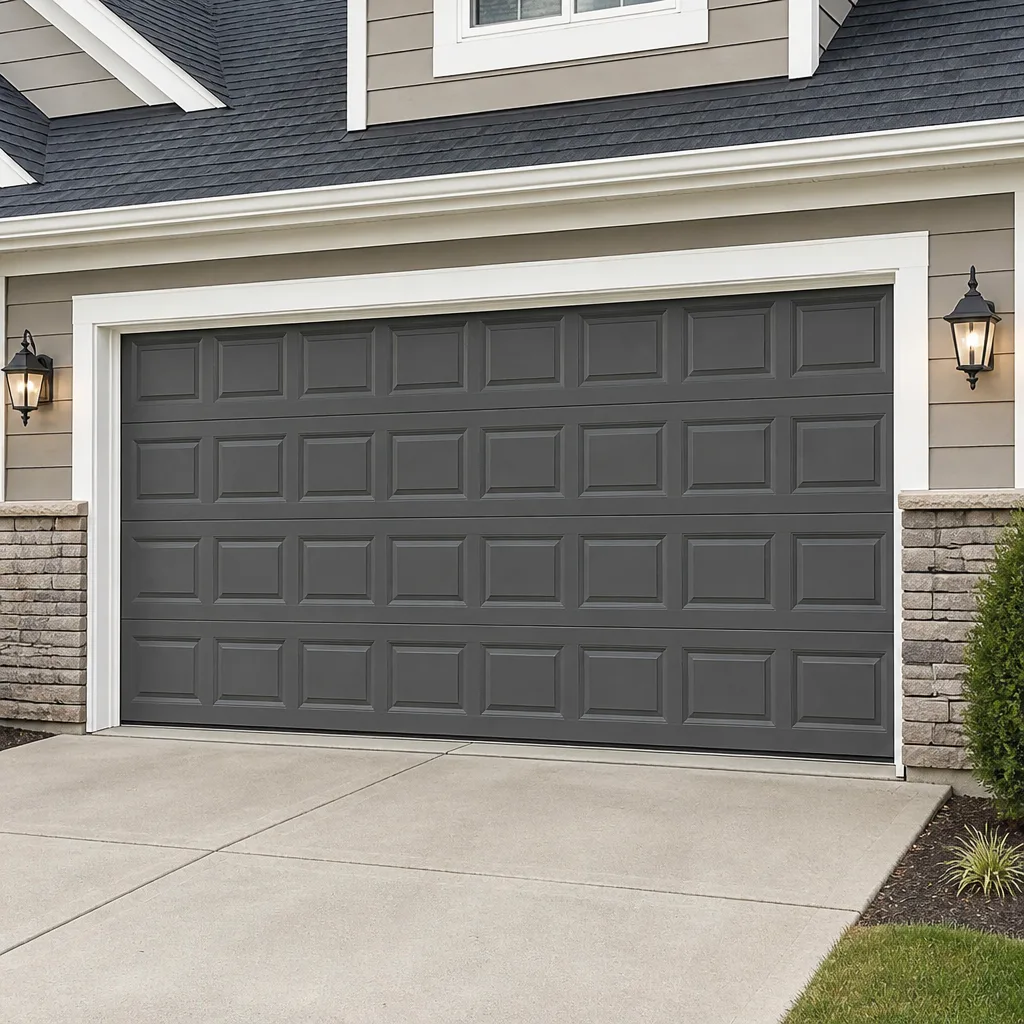 Raised-panel steel
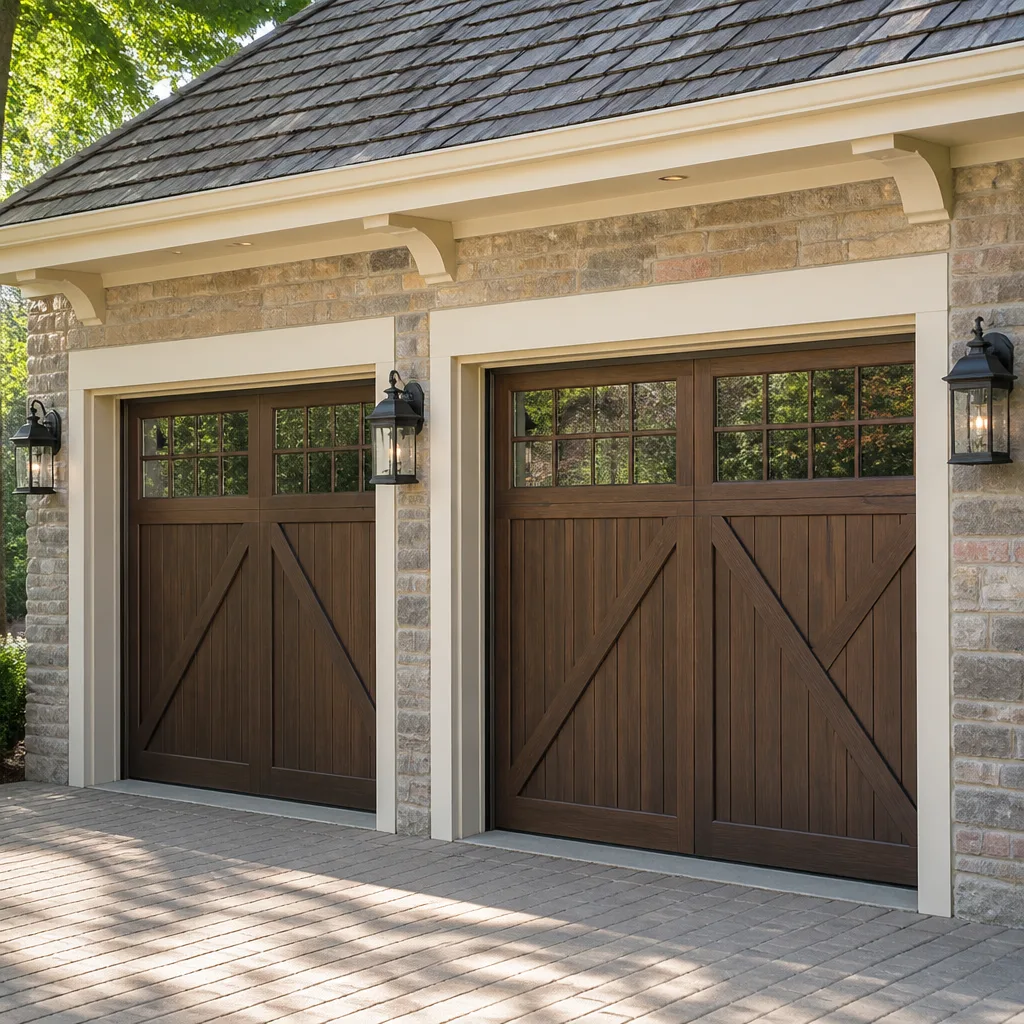 Carriage house
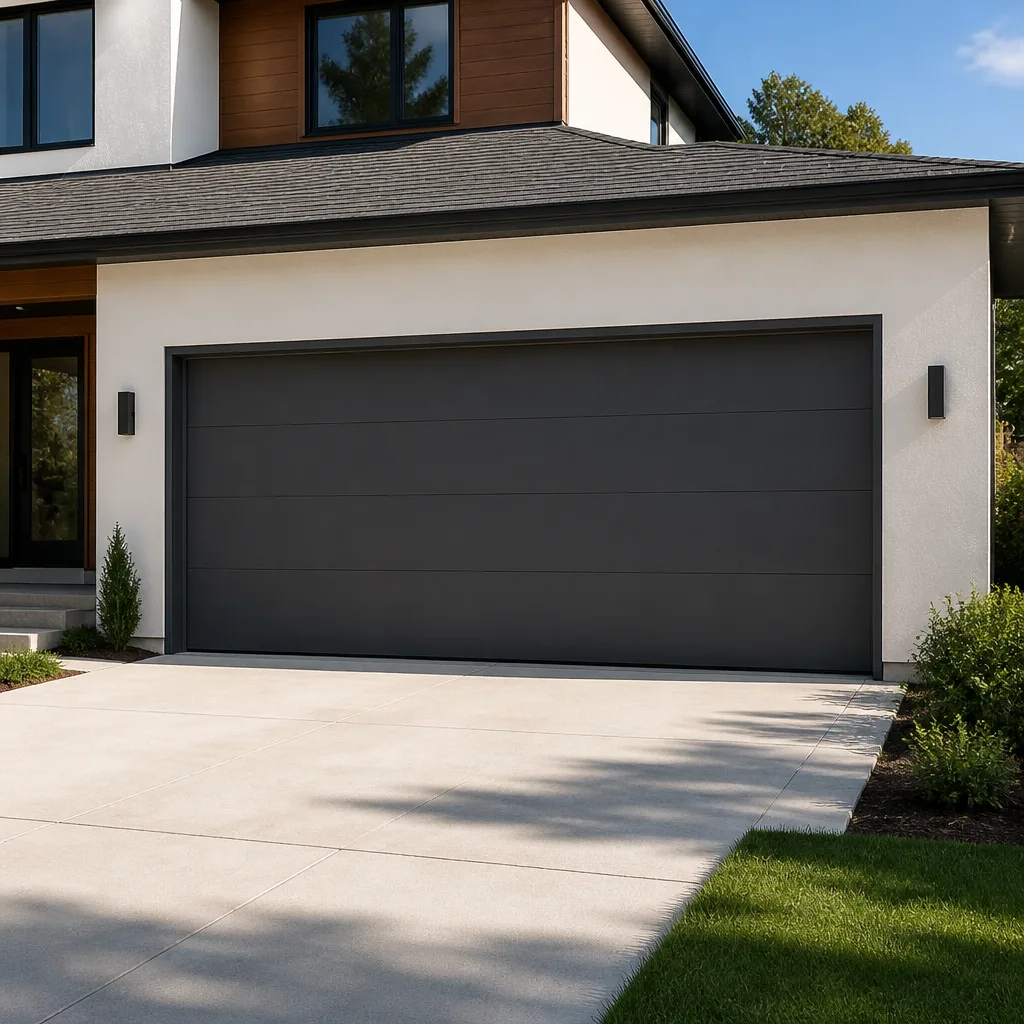 Modern flush
 Full-view glass
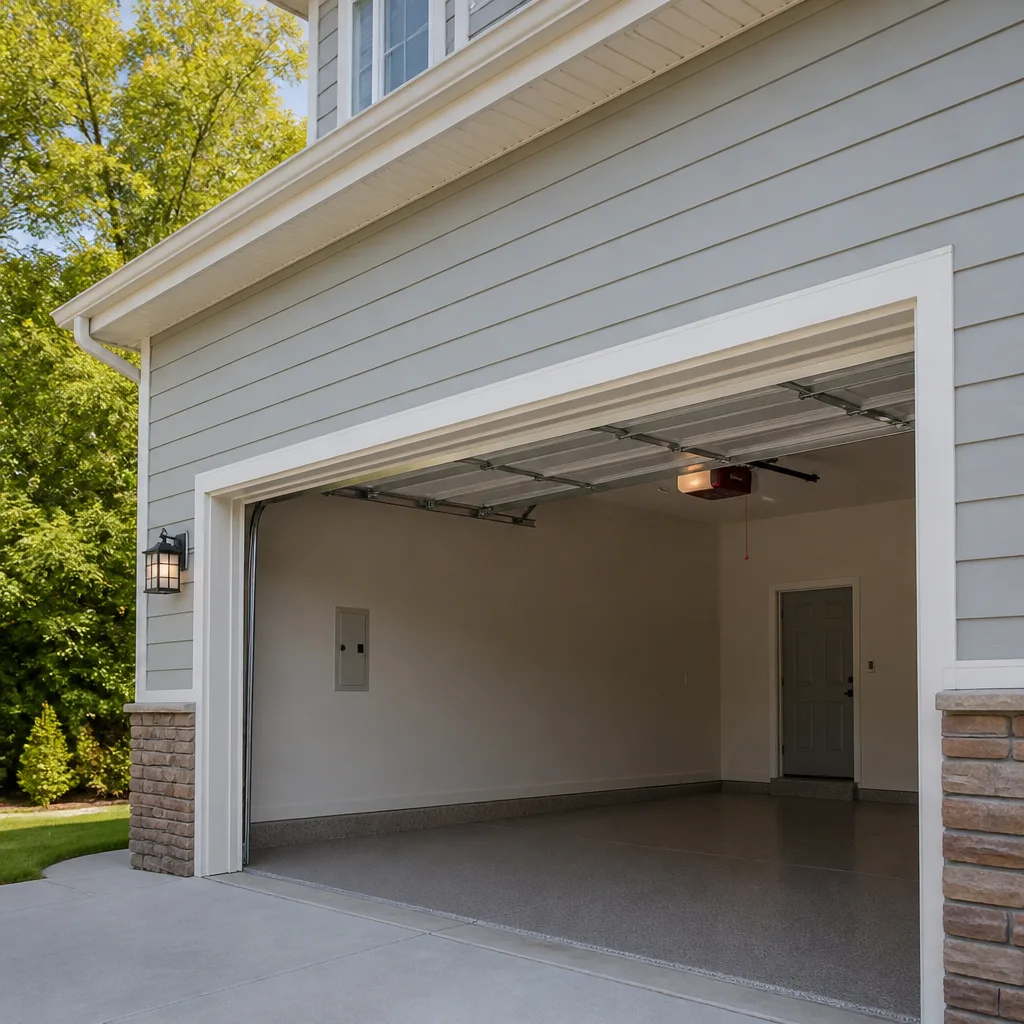 LiftMaster openers
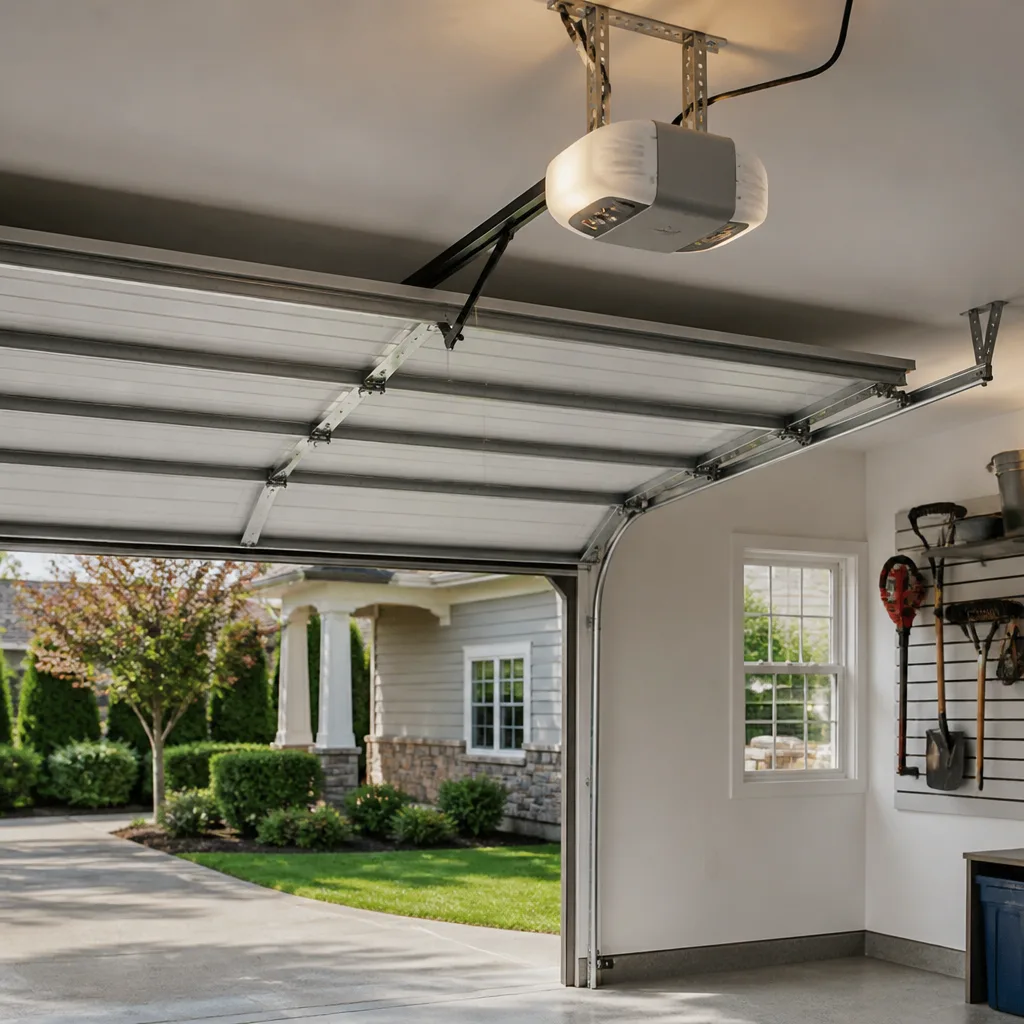 Chamberlain openers
Full 25-point door and opener safety check with every visit - springs, cables, rollers, tracks, and your LiftMaster or Chamberlain opener included
You get a price before we start. It does not change when the pro arrives.
Get your free estimateGarage Door Warning Signs: A Collinwood Homeowner’s Reference Guide
Most garage door guides start at the end: the spring snapped, the door won’t open, the car is trapped. That’s the wrong place to start. The signals that actually matter show up weeks earlier, when the door hesitates for a beat before rising, when a roller chirps on one side, when the opener sounds a little louder than it used to. Homeowners in Collinwood tend to file those symptoms under “just old” and move on. What they’re usually describing is a system telling them exactly which part is failing and roughly how long they have. This guide maps the early signals to the failures they precede, so a small repair stays small. You’ll learn what sounds mean, what to check visually, and the one monthly test that surfaces more problems than any other.
Quick Answer
The main warning signs of garage door trouble in Collinwood are a door that hesitates or moves unevenly, grinding or popping sounds during travel, visible fraying on the cables, worn or flat rollers, a door that won’t stay balanced at the halfway point, and an opener that strains or reverses without an obstruction. These are usually early signals of either opener strain or spring and cable wear, and they call for different responses. Catch them early and the repair stays modest; ignore them and the same component tends to fail completely.
Styles & brands we work with
- Raised-panel steel
- Carriage house
- Modern flush
- Full-view glass
- LiftMaster openers
- Chamberlain openers
Table of Contents
- The Early Signals Homeowners Dismiss as Normal Aging
- Opener Strain vs. Spring and Cable Wear: How to Tell Them Apart
- Visual Wear Indicators That Point to a Coming Failure
- Sound-Based Diagnostics: What Grinding, Popping, and Rattling Actually Mean
- The Monthly Door Balance Test
- What Waiting Costs: From Small Repair to Big One
- Why Collinwood Doors Show These Signs
- What to Do When You Spot a Warning Sign
The Early Signals Homeowners Dismiss as Normal Aging
A garage door doesn’t fail without warning. It fails after a stretch of small, easy-to-miss complaints, most of which get blamed on the door’s age. The problem is that a door that hesitates for one second before moving isn’t “just old.” It’s a motor working harder than its design load, and that pattern usually precedes opener burnout by a couple of months if nothing is done. That gap is your window.
Here are the early signals worth taking seriously, in roughly the order they tend to appear:
- The door pauses before it moves. A brief delay at the start of travel usually means the opener is fighting extra resistance. That resistance comes from worn rollers, a dry track, or a spring losing tension.
- One side lags behind the other. If the door looks crooked going up or down, the two sides aren’t moving together. Cables, springs, and hinges are all suspects.
- New noise that wasn’t there last year. Doors aren’t silent, but the sound should be steady. A new grind, pop, or rattle is a change in a component, not a personality trait of an old door.
- The opener sounds strained at the start and the end of travel. Those are the points of highest load. A motor that labors there is telling you something.
- The door reverses before it reaches the floor. The opener thinks it hit something. Sometimes it did; sometimes the resistance is internal.
- The remote takes more than one press. Not always a battery. A weak opener or a misaligned sensor can cause the same symptom.
None of these mean the door is about to fall. What they mean is that one component is wearing faster than the rest and dragging the whole system with it. On a typical Collinwood block of older homes with original or second-generation doors, this pattern is common, and it’s usually explainable. The point isn’t to panic. It’s to get it looked at while it’s a small job.
Opener Strain vs. Spring and Cable Wear: How to Tell Them Apart
These two problems look similar from the driver’s seat, and that’s exactly why homeowners misdiagnose them. A door that struggles to open could have a tired motor or a tired spring. The symptoms overlap, but the responses don’t, and putting a new opener on a door with a failing spring is a waste of money. Here’s how we separate them.
Signs That Point to the Opener
- The door moves normally once it’s going, but the motor sounds strained at the start.
- The opener’s light flickers or the unit resets itself during travel.
- The remote works only up close, or the wall button works while the remote doesn’t.
- The door reverses for no visible reason but runs smoothly when operated by hand.
- You hear the motor running but the door doesn’t move at all (a stripped gear or a broken drive).
Signs That Point to Springs or Cables
- The door is very heavy when you lift it by hand, or won’t stay up.
- One side of the door rises faster than the other.
- You can see a gap in a spring coil, or a spring looks stretched unevenly.
- A cable is slack, kinked, or sitting off its drum.
- The door slams down faster than it should when closing.
If the door is heavy by hand but the opener sounds fine, the opener is working correctly against a mechanical problem. That’s a spring or cable job, and it’s not one to handle yourself. Torsion springs and the cables under tension hold the door’s full weight, and a spring that lets go while you’re near it can cause serious injury. This is the one part of a garage door system we always tell homeowners to leave alone. If you suspect spring or cable trouble, Garage Door Repair Collinwood handles spring repair with the right tools and training, and we can identify which component is actually failing instead of guessing.
The reverse is also worth knowing. A door that’s easy to lift by hand but still struggles when the opener runs is usually an opener problem, not a mechanical one. In that case, garage door opener repair is the right call, and it’s a good idea to have the tech check the opener’s settings while they’re at it.
Visual Wear Indicators That Point to a Coming Failure
Some of the clearest warnings are visible before they’re audible. A five-minute walk-around with a flashlight catches most of them. You’re looking for changes from how the parts looked the last time you noticed them, not perfection.
Rollers
Rollers should be round and turn freely. Flat spots, cracks, or a roller that won’t spin means it’s dragging along the track instead of rolling through it. Worn rollers add resistance the opener has to push through, and that’s often the first domino. If several rollers are flat or cracked at once, expect to replace them as a set rather than one at a time.
Cables
Look at the cables that run down each side. They should be taut and sit cleanly on their drums. Frayed strands, kinks, or a cable that looks like it’s come off its drum are reasons to stop using the door and call for help. Cables are under extreme tension and are not a DIY item.
Bottom Brackets
The brackets at the bottom corners of the door anchor the cables. Look for rust, cracks, or hardware that’s visibly loose. A failing bottom bracket is one of the parts most closely tied to cable accidents, and it’s a job for someone with the right tools.
Hinges and Hardware
Loose hinges, missing bolts, and hardware that’s worked its way out over time cause the door to sag and bind. These are usually the cheapest fixes on the list, and the easiest to put off until they cause a bigger problem.
Tracks
Run your eye down each track. Dents, bends, or debris in the channel will drag on the rollers and cause the door to bind. A track that’s been bumped (by a car, a ladder, or a bike) is a common cause of a door that starts to stick on one side.
Sound-Based Diagnostics: What Grinding, Popping, and Rattling Actually Mean
Garage door sounds are more diagnostic than most people realize. A door that’s running correctly has a steady, low hum with a slight mechanical rhythm. Any new sound is a signal. Here’s how we read them.
Grinding
A grinding sound usually means metal on metal. The most common culprits are dry or worn rollers binding in the track, a dry or damaged opener rail, or a torsion tube that needs lubrication at its bearings. If the grind is at the opener itself, the drive gear may be worn. Grinding tends to get louder as the problem gets worse, so the earlier you catch it, the simpler the fix.
Popping
Popping is more serious than grinding. A single loud pop is often a spring letting go (which is exactly as dangerous as it sounds). A repeated pop during travel can mean a cable is slipping on its drum, or a hinge is loose enough to shift under load. If you hear a pop and the door suddenly becomes very heavy, stop using it and call for help.
Rattling
Rattling is usually hardware. Loose hinges, bolts backing out, or a door that’s lost its alignment. It’s often the cheapest of the sound problems to fix, but it’s worth taking seriously because rattling hardware puts stress on the parts around it.
Squealing
Squealing points to a lubrication problem, most often the rollers or the torsion tube bearings. It’s easy to dismiss, but a dry roller wears out faster and, over time, adds resistance to the whole system.
A Single Sharp Bang at the End of Travel
That’s usually the door hitting the limit with too much force, often because the opener’s travel limits or force settings are off, or because the door is bouncing at the floor. It’s not just annoying; it puts wear on the opener and the door’s frame.
If a sound has appeared in the last few months and hasn’t gone away, it’s telling you something. A garage door tech can usually identify the source before the door comes down for repair, which is why we ask homeowners to describe the sound when they call. If the opener is the source, garage door opener repair can often sort it out in a single visit.
The Monthly Door Balance Test
This is the one test we tell every Collinwood homeowner to run once a month. It’s simple, it doesn’t require tools, and it surfaces a wider range of developing problems than any other single check. Here’s the process.
- Disconnect the opener. Pull the release cord (usually a red handle) so the door is free to move by hand. Don’t force it if it won’t release cleanly.
- Lift the door to the halfway point. Raise it slowly with both hands and stop when the bottom of the door is roughly level with your chest.
- Let go carefully and watch what happens. A balanced door will hold itself in place or very nearly so. Keep your hands close so you can catch it.
- Lower the door and listen. A door that’s hard to lift, drops quickly, or feels heavy on one side is telling you the springs aren’t carrying their share of the weight.
- Reconnect the opener. Run the door up and down once to confirm the opener re-engages the trolley cleanly.
Here’s what the result means. A door that stays put is balanced. A door that drifts up or down on its own has spring tension that’s off, usually because a spring has lost some of its tension or a cable has slipped. A door that’s very heavy to lift has springs that aren’t doing their job. A door that’s very light to lift, and slams shut when you let go, is often a sign of a spring that’s about to fail. The test doesn’t tell you which part is wrong. It tells you the door isn’t balanced, and that’s the point where a professional look is worth the call.
If your door fails the balance test, do not adjust the springs yourself. Torsion and extension springs are under extreme tension, and the tools and training needed to adjust them safely are not things you want to improvise. This is the part of the system where we always recommend a professional.
What Waiting Costs: From Small Repair to Big One
The value of catching a warning sign early isn’t abstract. It’s the difference between replacing a set of rollers and replacing the opener, or between a spring repair and a door that needs new cables, a bottom bracket, and a spring after a fail. Here’s how the common early signals map to what happens if you ignore them.
- Worn rollers (caught early): A straightforward roller replacement. Ignored, the extra drag wears the opener and the hinges, and you’re now looking at rollers plus opener strain plus hardware.
- Dry or worn hinges (caught early): A lubrication and hardware check. Ignored, a hinge that fails under load can distort the door panel.
- Slightly heavy door (caught early): A spring adjustment or, more often, a spring replacement. Ignored, the door keeps working the opener harder until the opener fails, and now you’re replacing both.
- Frayed cable (caught early): A cable replacement. Ignored, the cable can come off its drum, which can cause a sudden drop and panel damage.
- Opener strain (caught early): A diagnostic and often a reset or a small part. Ignored, the opener burns out, and you’re looking at a full opener replacement.
- Slow or sticky door (caught early): A track adjustment or lubrication. Ignored, the door binds hard enough to damage a panel or the opener arm.
In our experience, the homeowner who calls early and the homeowner who calls after the failure both end up with a working door. The difference is what they spent getting there. If your door has gone past warning and into failure, or you’re not sure where it sits, garage door repair can diagnose it in one visit and tell you exactly what it needs. Our technicians have up to 13 years of experience, and we work on the brands that are actually installed in Collinwood garages.
Why Collinwood Doors Show These Signs
Collinwood has a few conditions that make garage doors work harder here than in newer subdivisions. Most of the housing stock is older, and many garages were built for cars that were smaller than the ones parked in them now. That mismatch means doors get used more, hit more often, and pushed harder on some of the hardware than the original builder expected.
The local climate plays a role too. Winters in Collinwood bring freeze-and-thaw cycles, and the temperature swings from fall into winter put real stress on the metal parts of the system. Springs, cables, and hardware expand and contract across those swings. It’s normal for a door that’s felt fine all summer to start showing a symptom in the fall. That’s not the door’s fault; it’s the season change working on worn parts.
Older doors also tend to have original openers or second-generation units, and that’s where the brand question becomes practical. If your door has a Craftsman or a Raynor opener, or a LiftMaster or Chamberlain unit added later, the tech who arrives should recognize it on sight. That’s why we work on eight of the most widely installed residential brands: LiftMaster, Chamberlain, Genie, Clopay, Amarr, Wayne Dalton, Craftsman, and Raynor. It’s a garage-door specialist’s version of speaking the language. On a Collinwood street with a mix of older and newer homes, you’ll see most of those in the same afternoon.
Collinwood also has a mix of detached and attached garages, and the attached ones usually share a wall with the house. That matters for two reasons. First, the security factor: a door that won’t close is a house issue, not just a car issue. Second, the structural one: a door with a failing component is putting stress on the frame it hangs from, and on an attached garage, that’s part of the house. A warning sign on a door like that is worth a closer look than one on a detached shed.
What to Do When You Spot a Warning Sign
Here’s the order we recommend, and it’s the same one we’d give a neighbor.
- Stop using the door if it’s unsafe. If you hear a loud pop, see a cable come off, or the door becomes very heavy, stop operating it. Use the disconnect and leave the door down.
- Run the balance test. It’s safe, quick, and tells you whether the problem is likely in the springs or the opener.
- Walk the door with a flashlight. Look at rollers, cables, brackets, and hinges. Note anything new.
- Listen on the next few open/close cycles. Note any grind, pop, rattle, or squeal, and when it happens.
- Call for a diagnostic. Describe what you saw and heard. A tech can usually identify the component quickly and tell you whether it’s a small fix or a bigger one.
- Get a written estimate before any work starts. The price should be set per job, in writing, and agreed before the tech begins.
If the door is beyond repair, or if you’re weighing a repair against a replacement on an older door, garage door installation is the full-lifecycle piece. We handle the measure, the order, and the install, so you’re not calling a second company.
Common Mistakes to Avoid
- Assuming the opener is the problem. A struggling door is often a mechanical issue, not a motor issue. Replacing an opener on a door with a failing spring is money down the drain. Have both checked before you replace either.
- Adjusting the springs yourself. This is the one repair that causes the most serious injuries in the trade. Torsion springs hold the full weight of the door and are under extreme tension. Leave them to a trained tech with the right tools.
- Ignoring a new sound because it’s intermittent. An intermittent grind or pop is still a signal. It usually means a part is moving toward failure, and the interval between incidents tends to shorten. Catching it while it’s intermittent is the whole point.
- WD-40 on the springs and rollers instead of proper lubrication. WD-40 is a solvent, not a lubricant, and it can strip the existing grease rather than replace it. Use a garage-door-specific lubricant, and don’t spray it on the springs themselves without checking with a tech first.
- Forcing a door that’s stuck. A door that won’t open the last few inches, or binds on one side, is telling you something is wrong. Forcing it can damage a panel and turn a small repair into a bigger one.
- Waiting until the weather turns. A door that’s been showing a symptom through the fall is more likely to fail in the first cold snap than at any other time. It’s worth getting it looked at before the season changes, not after.
- Not knowing your brand. When you call, knowing whether your door is a Clopay or a Wayne Dalton and whether the opener is a LiftMaster or a Genie helps the tech arrive prepared. If you don’t know, that’s fine; a photo of the opener label and the door panel is usually enough.
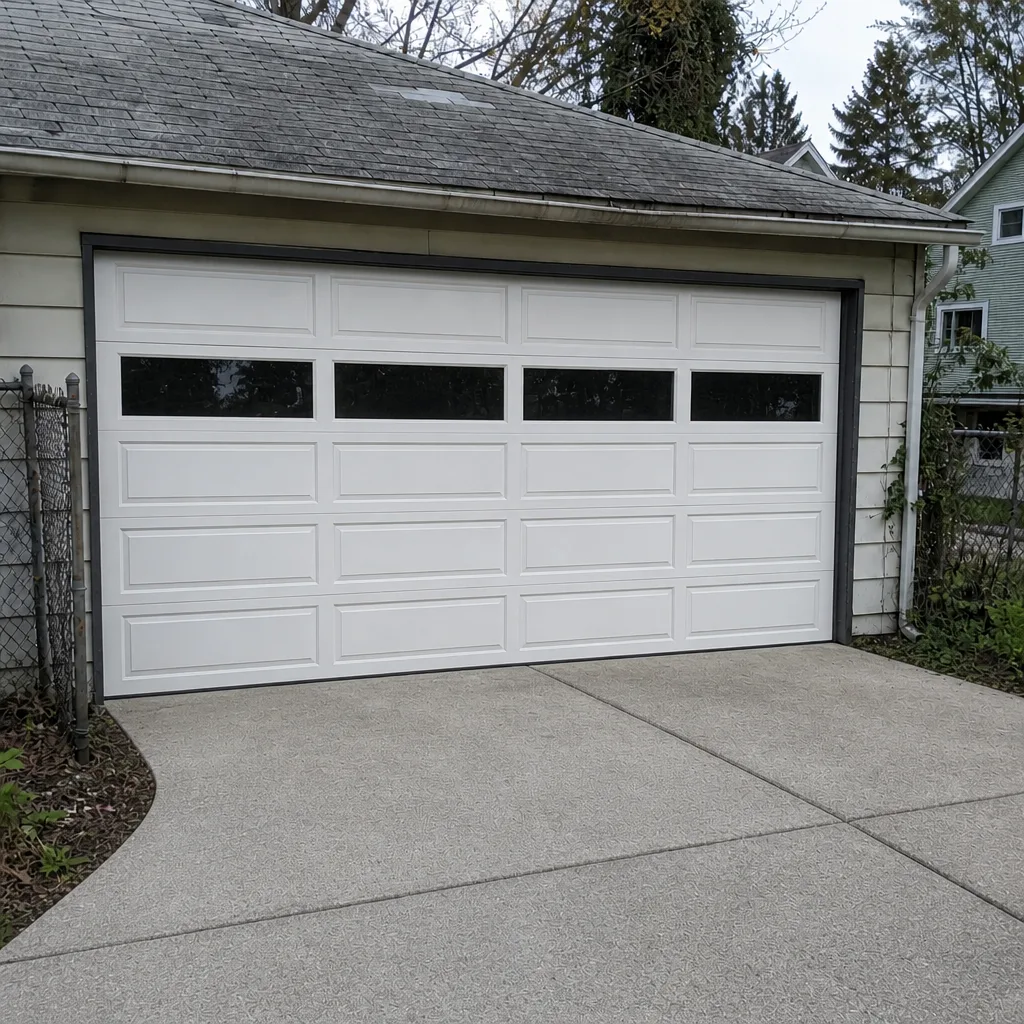
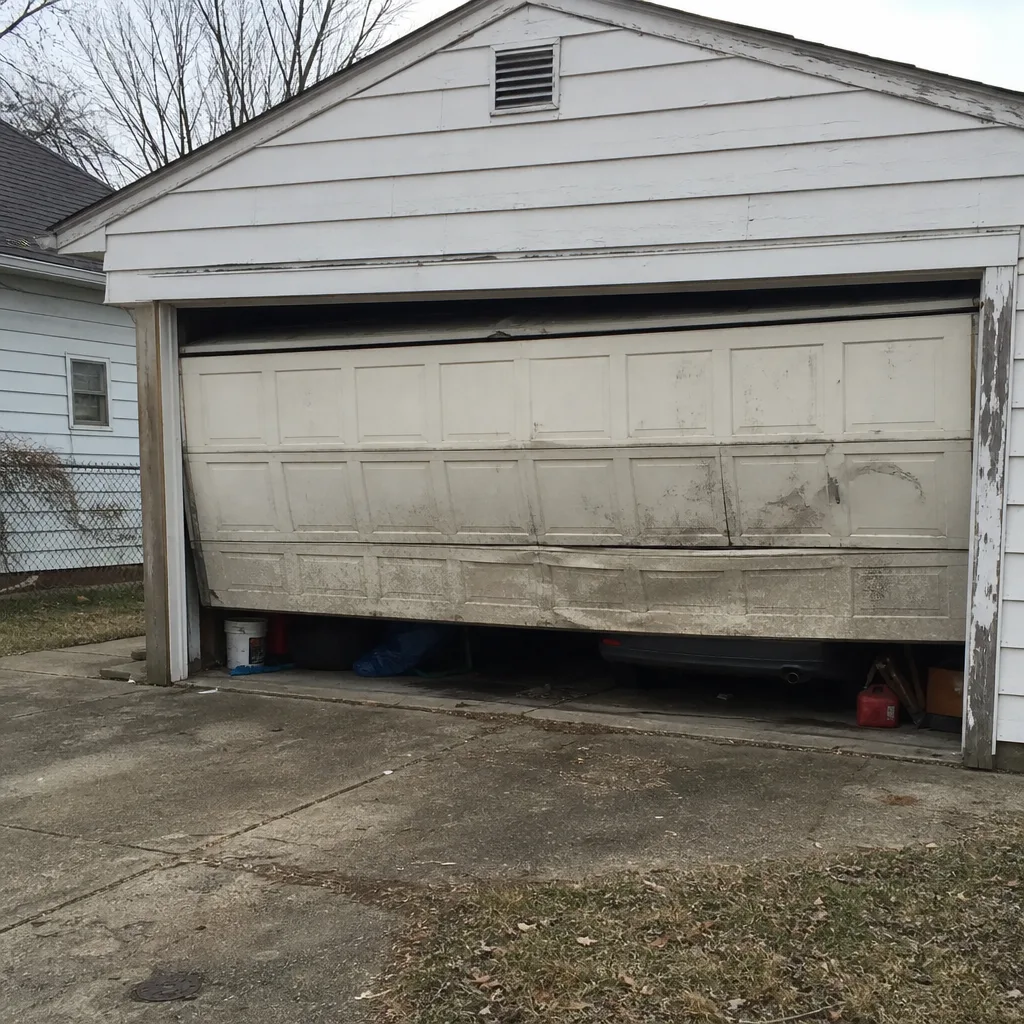
See the difference
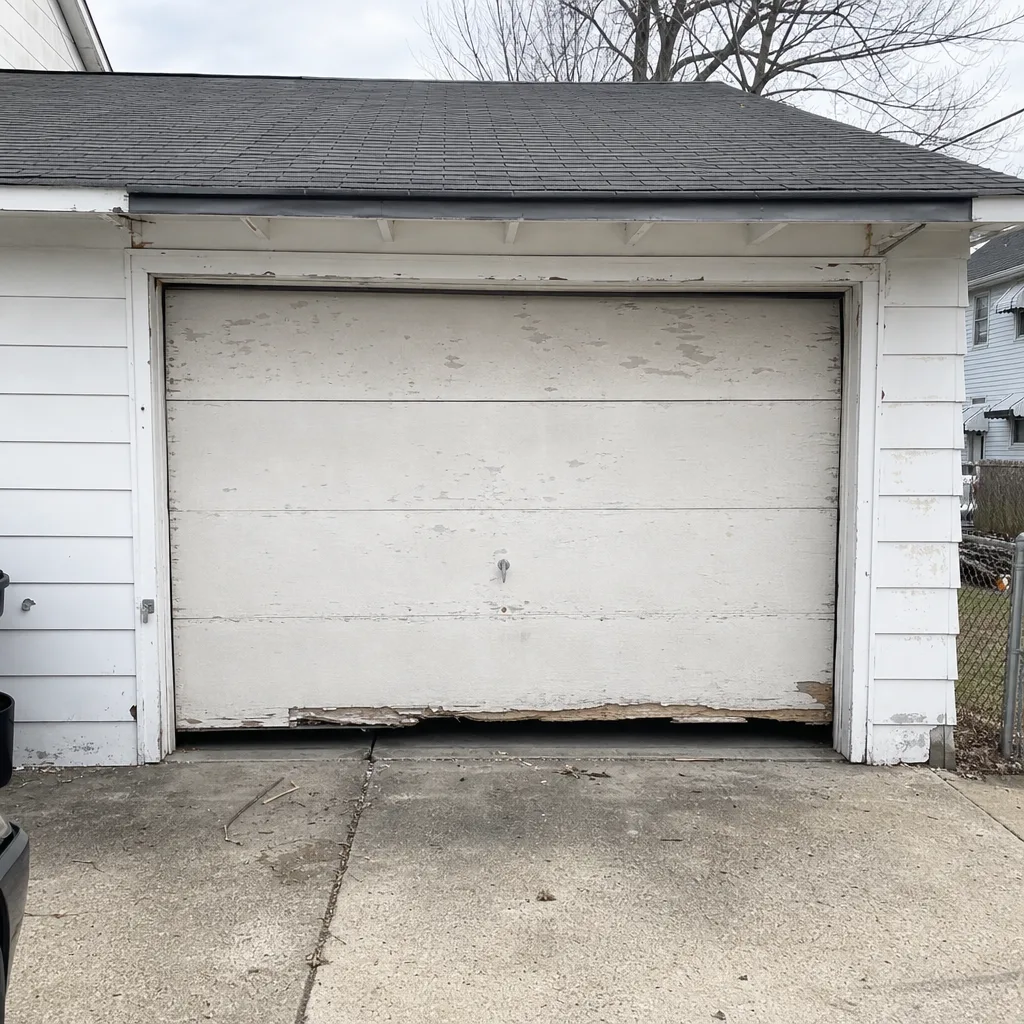 Before
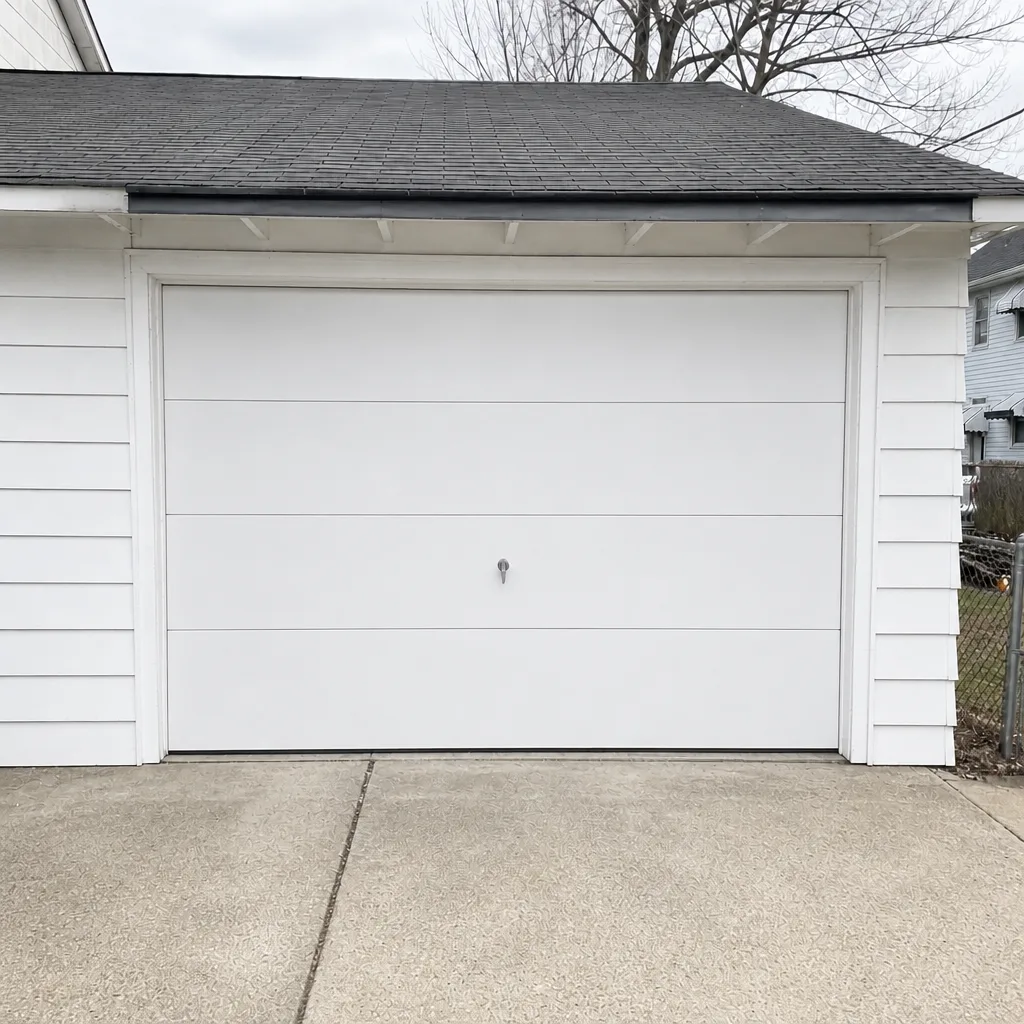 After
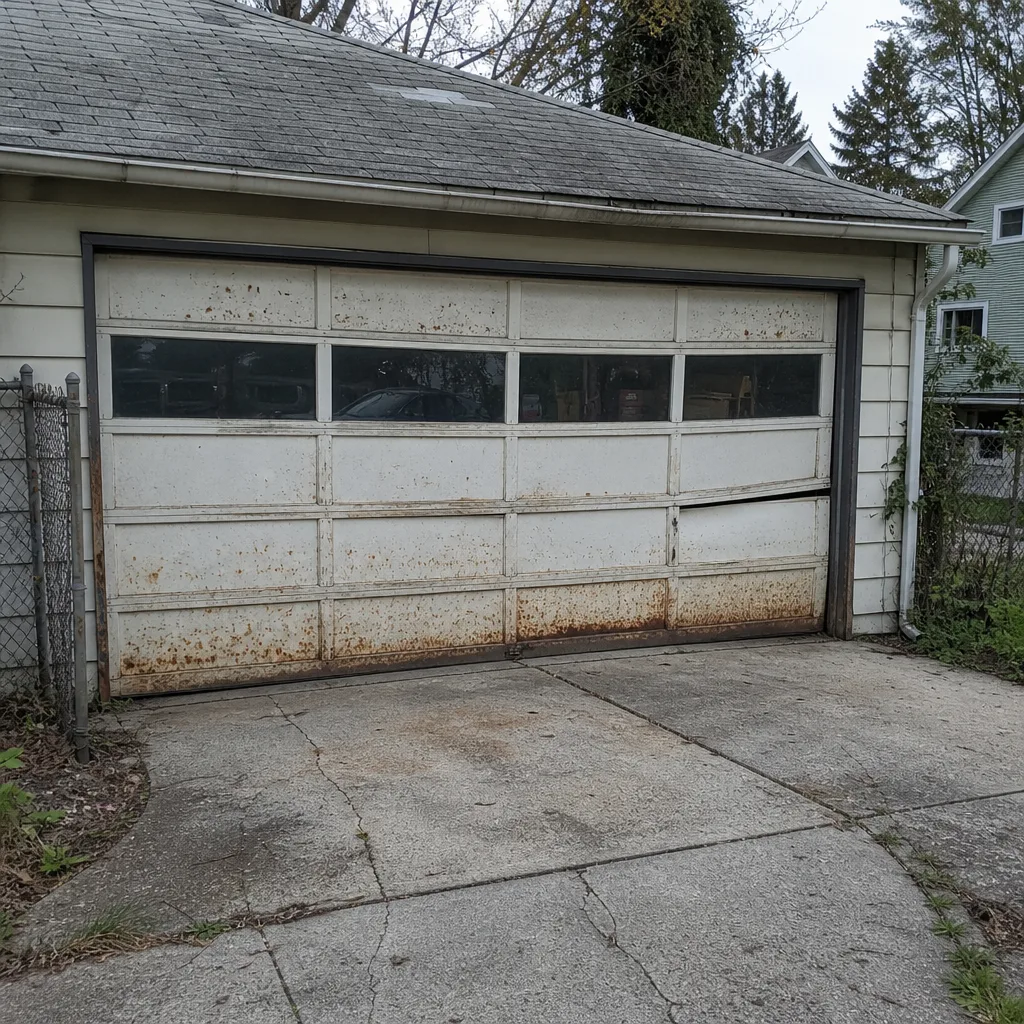 Before
 After
 Before
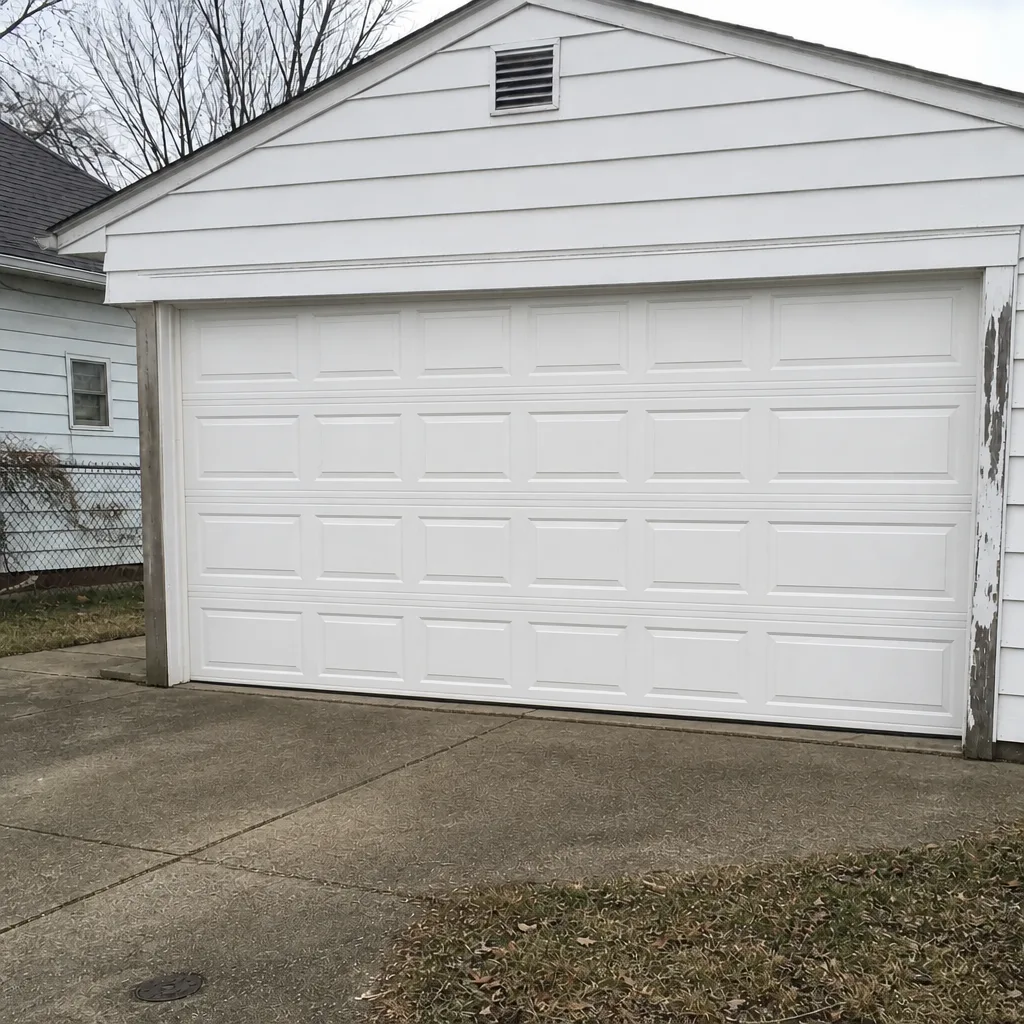 After
When to Call a Professional
Some of this guide is safe to check yourself. The balance test, the visual walk-around, and listening on a couple of cycles are all things a homeowner can do. The line is where the repair begins. Call a professional if the door fails the balance test, if a cable is frayed or off its drum, if the door makes a loud pop or suddenly becomes heavy, if the opener runs but the door doesn’t move, if the door binds on one side, or if you have any doubt at all about a spring or a bottom bracket. These are the parts of the system where the risk of injury goes up sharply and where the wrong fix makes the problem worse.
Garage Door Repair Collinwood offers free estimates in Collinwood. Call (844) 919-4174. We answer 24/7, with fast dispatch from 7am to 7pm, Sunday through Friday. Our technicians have up to 13 years of experience, and we work on the eight brands most often installed in residential garages around here. Whether it’s a small repair or a door that’s reached the end of its service life, we can tell you what it needs and what it will cost before any work starts.
Frequently Asked Questions
The most common first sign is a door that hesitates or slows down at the beginning of travel, usually because the opener is working harder than it should. A newly heavy-feeling door, a new sound, or a door that doesn’t stay balanced at the halfway point are the other early indicators. Any one of these is worth checking before it turns into a bigger repair. Call (844) 919-4174 for a free estimate if you spot one.
Spring repair in Collinwood is a per-job price set by a written estimate, and it depends on whether you have torsion or extension springs, how many springs are involved, and the condition of the surrounding hardware. A matched pair is usually replaced together, so the pair costs more than a single spring. We don’t quote a number over the phone because the only honest price is the one the tech writes down after looking at your door. Call (844) 919-4174 for a free estimate.
Some can. Lubricating rollers and hinges, tightening loose hardware, and replacing a remote battery are all reasonable do-it-yourself tasks. Springs, cables, and bottom brackets are not, because those parts are under extreme tension and a failure can cause serious injury. If the balance test fails or you see a cable issue, that’s a professional call. Call (844) 919-4174 and we’ll tell you what we find.
A grinding sound is usually metal on metal, most often dry or worn rollers binding in the track, a dry opener rail, or worn torsion tube bearings. It’s a sign of friction that’s increasing with every cycle, and it tends to get louder over time. Having it checked early usually means a simpler fix. Call (844) 919-4174 to have it looked at.
Run the balance test once a month and do a visual walk-around at the same time; it takes less than ten minutes. Listen on any open or close cycle for new sounds. If you notice a change in the door’s behavior, don’t wait for the next monthly check. Call (844) 919-4174 and we’ll help you figure out what’s going on.
A new noise on a door that still works is still worth a call, because the noise is usually the early stage of the failure that follows. A door that still opens today can be the door that doesn’t next month, and the repair is typically smaller when it’s caught early. Call (844) 919-4174 for a free estimate.
The Bottom Line
Garage door failures are rarely sudden, they’re just the last step in a pattern that started weeks or months earlier. A door that hesitates, a new grind, a door that won’t stay balanced, a cable that looks frayed: these are early signals, not personality quirks. The two things worth doing are the monthly balance test (about five minutes, and it catches a surprising amount) and a professional look the moment anything changes. Whether you need a small repair or a full new door, Garage Door Repair Collinwood handles the whole lifecycle, and the written estimate is the price before any work starts. Call (844) 919-4174 for a free estimate.
Written by the team at Garage Door Repair Collinwood.